“Healing Art from the Eastern Vision”—Asia-Pacific Healing Art International Academic Symposium and Emotional Expression Artworks Exhibition Successfully Held
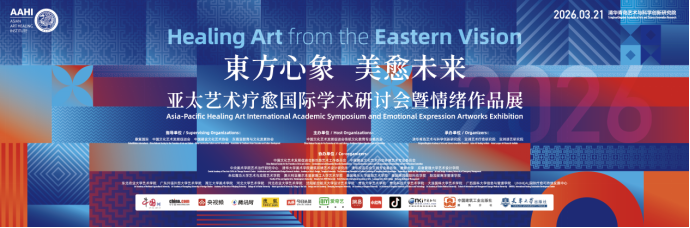
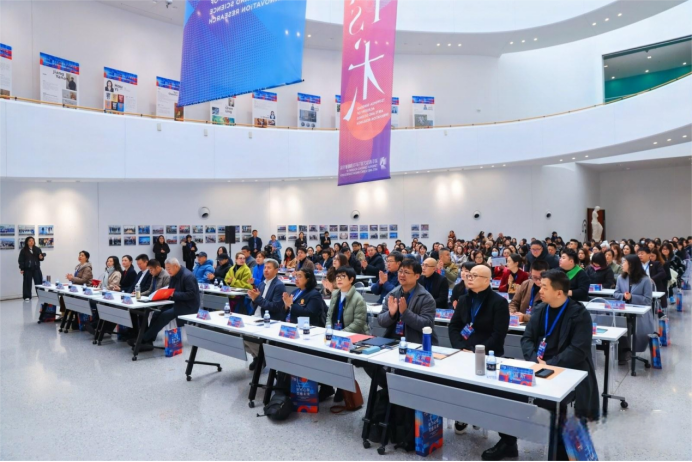
On March 21, 2026, the Asia-Pacific Healing Art International Academic Symposium and Emotional Expression Artworks Exhibition with the theme of “Healing Art from the Eastern Vision” was grandly held at the Tsinghua (Qingdao) Academy of Arts and Science Innovation Research (TASA). The event was guided by the China National Society for the Promotion of Arts and Culture (CNSPAC) and the China Construction Culture and Art Association (CCCAA), hosted by the Professional Committee of Traditional Culture and Education of CNSPAC, and co-organized by TASA, the Asian Art Healing Institute (AAHI), and the Asian Lacquer Art Research Institute (ALARI). More than 200 experts, scholars, and university representatives from countries such as China, Thailand, and Australia gathered together to conduct in-depth discussions on the theoretical construction, practical paths, and interdisciplinary integration of art healing.
The symposium garnered significant attention from various sectors of society. Distinguished guests included ZHANG Haidi, Chairperson of the 5th, 6th, and 7th Presidiums of the China Disabled Persons’s Federation (CDPF) and Honorary President of the University of Health and Rehabilitation Sciences; DONG Erdan, Academician of the Chinese Academy of Engineering (CAE) and President of the University of Health and Rehabilitation Sciences; XU Yanjun, Second-level Researcher of the Health Bureau of Qingdao West Coast New Area; ZENG Jinsong, Secretary-General of the Institute for Global Development (IGD) of Tsinghua University and Vice President of Charoen Pokphand Group; ZOU Zhirui, Former Director of the Ballet Department and Professor at Beijing Dance Academy; WANG Jiansong, Tenured Professor and Ph.D. Supervisor at the Academy of Arts & Design, Tsinghua University (AADTHU) and Executive Vice President of TASA; XIE Qihong, Director of the Training Center of AADTHU; and Kumkom PORNPRASIT, Dean of the Faculty of Fine and Applied Arts at Chulalongkorn University, Thailand. The event was also attended by leaders from over one hundred universities and colleges nationwide, including the University of Health and Rehabilitation Sciences, the Art Academy of Northeast Agricultural University, the College of Art of Guangdong University of Foreign Studies, and the Academy of Fine Arts College of Minjiang University, along with experts and scholars in the field of art healing. Their collective presence brought diverse perspectives to the development of art healing and marked the occasion with the launch ceremony of the Asia-Pacific Healing Art Alliance.

1
Opening and Launch: Healing Voyage from Multiple Perspectives
At 8:00 a.m., the conference opened in a solemn yet vibrant atmosphere. The graduate student team led by DONG De, Associate Professor at the College of Music, Hainan Normal University opened the event with a powerful emotional performance of Madness and Civilization. Through body language, they questioned the boundaries of reason and emotion, drawing a deeply resonant response from the audience.
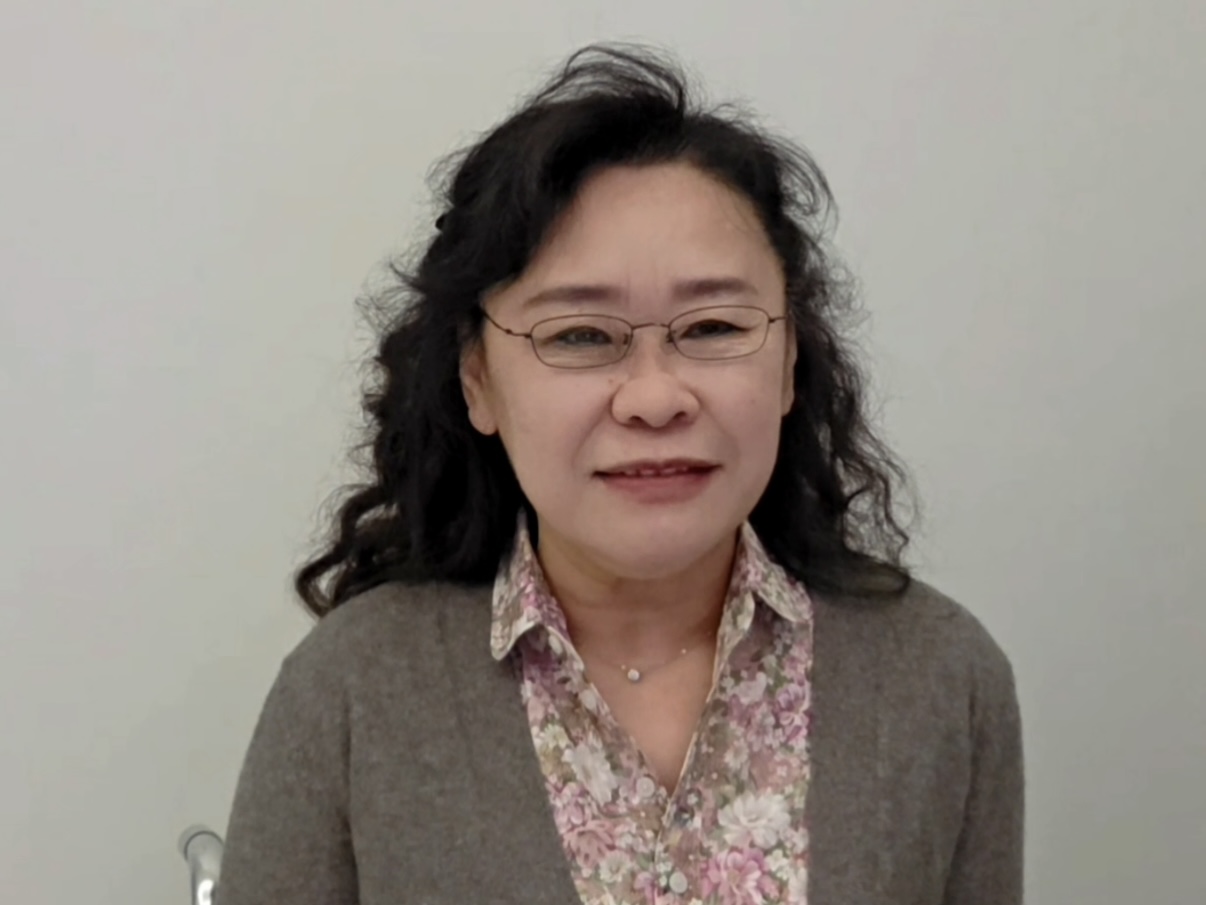
In a video address, ZHANG Haidi, Chairperson of the 5th, 6th and 7th Presidium of CDPF and Honorary President of the University of Health and Rehabilitation Sciences, noted that emotional and mental health issues are now a major global public health concern. She stressed that integrating rehabilitation with the arts offers a new path for future healing, expressing her hope that the symposium would promote the integration of art healing into special education and mental health rehabilitation, contributing to a Healthy China and global rehabilitation efforts.
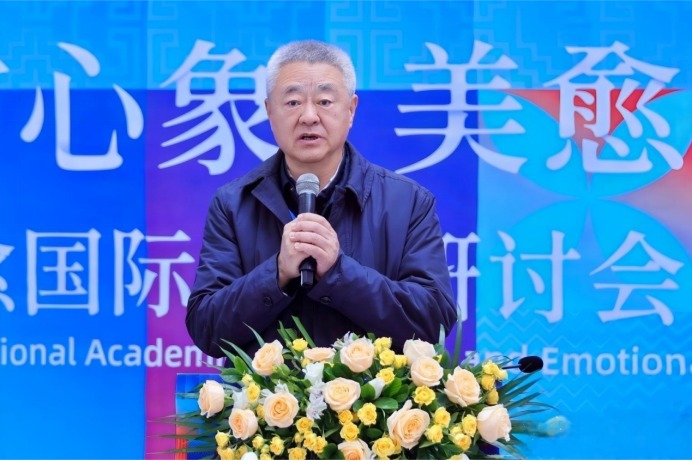
DONG Erdan, Academician of CAE and President of the University of Health and Rehabilitation Sciences, remarked in his address that life derives its greatness from resilience, health gains its richness from art, and rehabilitation advances through technology. He called on all stakeholders to jointly safeguard the beauty of life and foster the cross-disciplinary integration and coordinated development of the arts, technology, and rehabilitation.
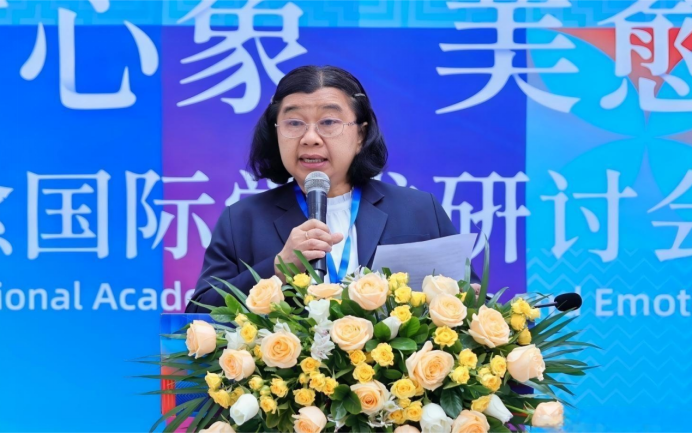
Prof. Kumkom PORNPRASIT, Dean of the Faculty of Fine and Applied Arts at Chulalongkorn University, Thailand, highlighted that mental health issues are increasingly affecting populations worldwide, especially amidst societal and worldwide crises. He also expressed hope for deeper collaboration with Chinese institutions in the future.
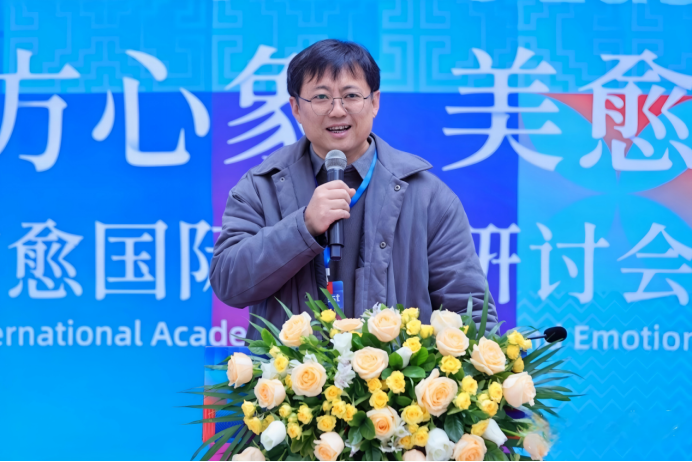
Prof. JIN Hui, Dean of the Academy of Fine Arts College of Minjiang University, pointed out that from the “five-tone singing therapy” of the Huangdi Neijing (The Yellow Emperor’s Classic of Internal Medicine) to contemporary neuroscience, the profound connection between art and mind-body health has been consistently confirmed. Art healing has become a vital pathway for psychological healing with broad applications.
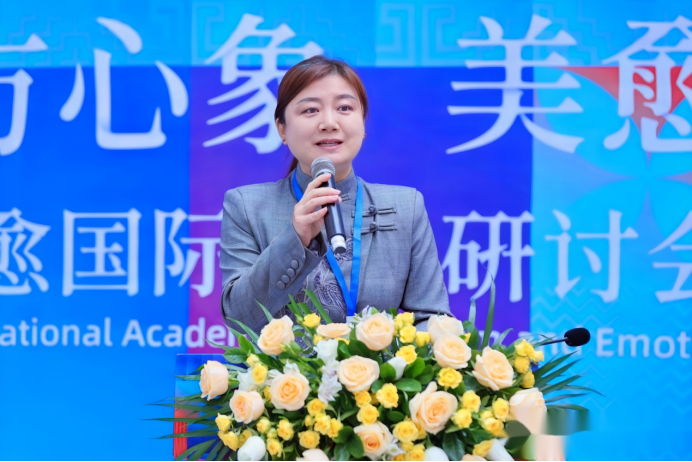
Prof. LIU Dan, Dean of the Art Academy of Northeast Agricultural University, noted that the symposium integrates technological innovation and humanistic warmth. Art healing is emerging as a promising interdisciplinary field with significant academic value and practical societal needs.
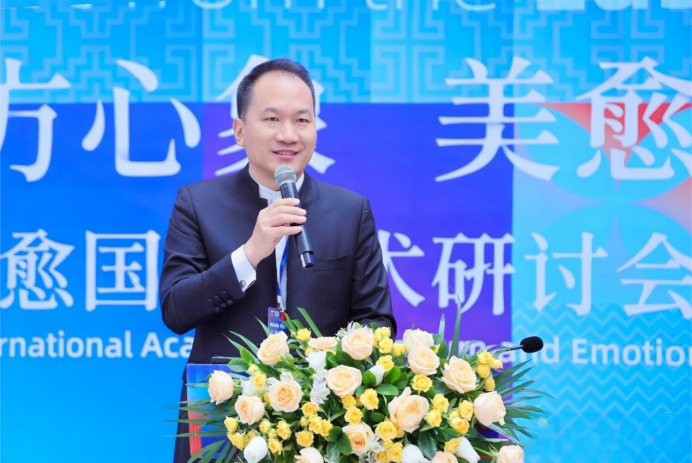
HOU Libin, Secretary-General of the Professional Committee of Traditional Culture and Education of CNSPAC and Vice President and Secretary-General of AAHI, presided over the opening ceremony.
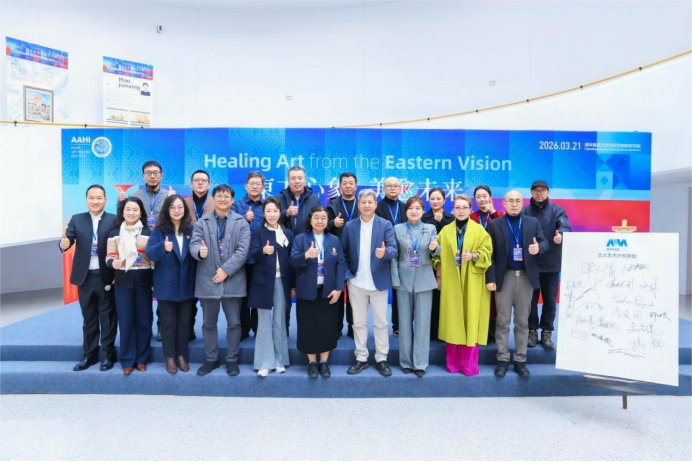
Leaders and representatives from various domestic and international universities who attended the event jointly signed the Asia-Pacific Healing Art Alliance Initiative, marking a milestone step forward in the collaborative development of art healing between regions. The signatories included: Prof. Kumkom PORNPRASIT, Dean of the Faculty of Fine and Applied Arts at Chulalongkorn University, Thailand; TAN Hongqian, Director of the Art Teaching and Research Office at the University of Health and Rehabilitation Sciences; LIU Dan, Dean of the Art Academy of Northeast Agricultural University; WANG Kaihong, Dean of the College of Art of Guangdong University of Foreign Studies; JIN Hui, Dean of the Academy of Fine Arts College of Minjiang University; CHEN Min, Deputy Secretary of the Party Committee of the Academy of Fine Arts College of Minjiang University; HOU Zhigang, Dean of the College of Art of Hebei University; LU Guoxin, Dean of the College of the Arts of Hebei Agricultural University; WANG Haiyan, Deputy Secretary of the Party Committee of the School of Music of Hebei Normal University; CHEN Liwei, Vice Dean of the Institute for Design of Hebei Academy of Fine Arts; LIU Liwei, Dean of the Art College of Dalian Medical University; LI Xiaonan, Vice Dean of the Art College, Qingdao University; SHAO Limin, Dean of the School of Design and Fine Arts, Qingdao Huanghai University; HU Chengming, Dean of the School of Architecture and Art, Ningbo Polytechnic University; YANG Meng, Vice Dean of the School of Design and Art, Shenyang Aerospace University; LI Wenhong, Director of the Department of Health Humanities at Zhengzhou Health College; ZHANG Xiaomin, Director of the Aesthetic Education Teaching and Research Office at Liaoning Petrochemical University; and LIANG Bing, Deputy Director of the Student Affairs Office of the Jewelry College, Guangzhou City University of Technology, among others.

2
Keynote Presentation: Multidimensional Exploration of Art Healing Core and Practice
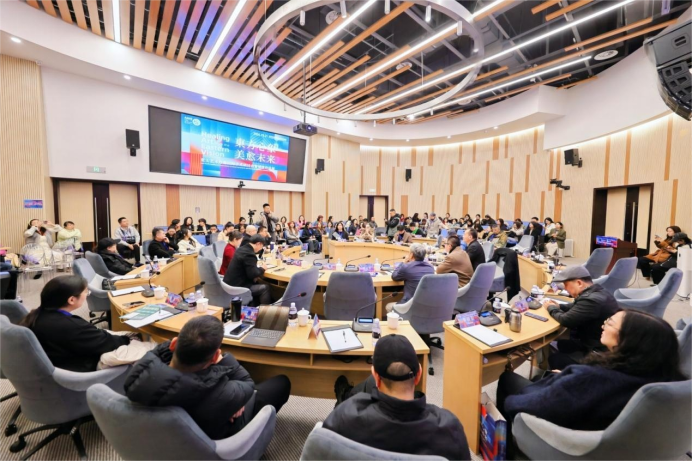
During the keynote session, experts and scholars from China and abroad presented high-level academic presentations from theoretical research, international practice, local innovation, and interdisciplinary exploration, offering new insights and methodologies for the development of art healing.
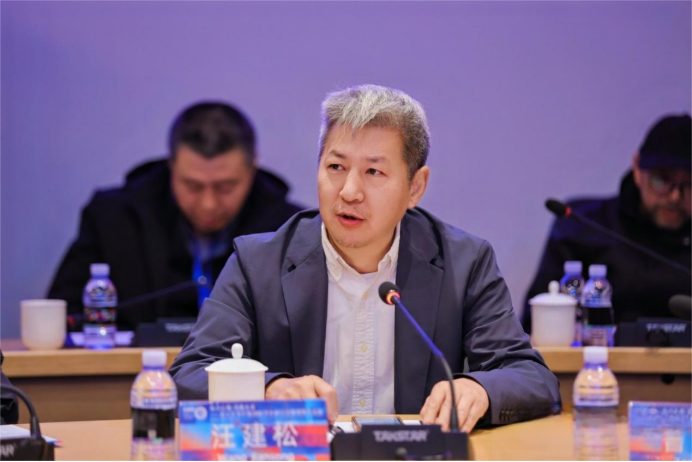
WANG Jiansong, Tenured Professor and Ph.D. Supervisor at AADTHU and Executive Vice President of TASA, chaired the morning academic forum.
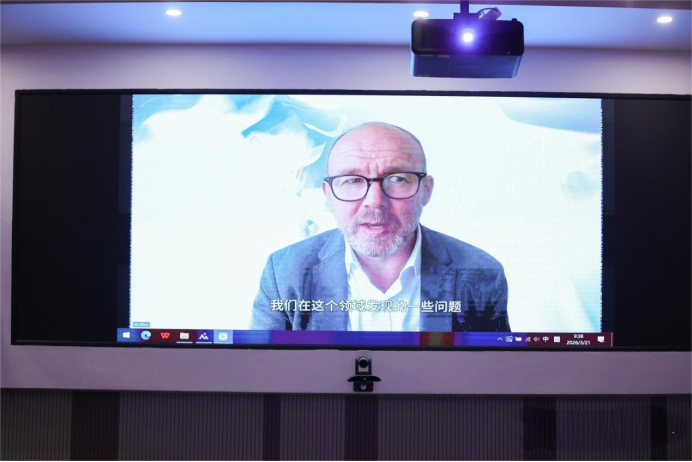
Prof. Kit WISE, Dean of RMIT University in Australia, delivered a speech titled Creative Care: Archives of Feeling, sharing cutting-edge academic concepts through an interdisciplinary art healing practice model.
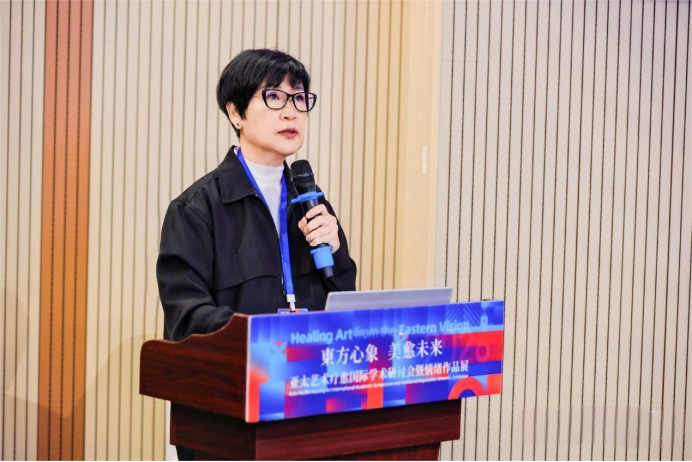
Prof. Bussakorn BINSON, Director of the Program of Master of Arts in Expressive Arts Therapy at Chulalongkorn University, Thailand, delivered a profound presentation titled “When No One Holds the Heart, Art Does!” elucidating the power of art to support humanity through spiritual adversity.
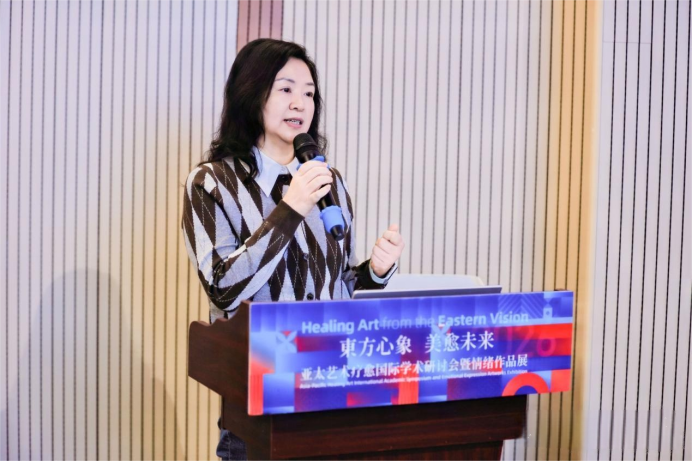
XIE Qihong, Director of the Training Center of AADTHU, spoke on the “spiritual value of ‘useless beauty’ in a utilitarian age,” proposing art as the most potent healing force in life.
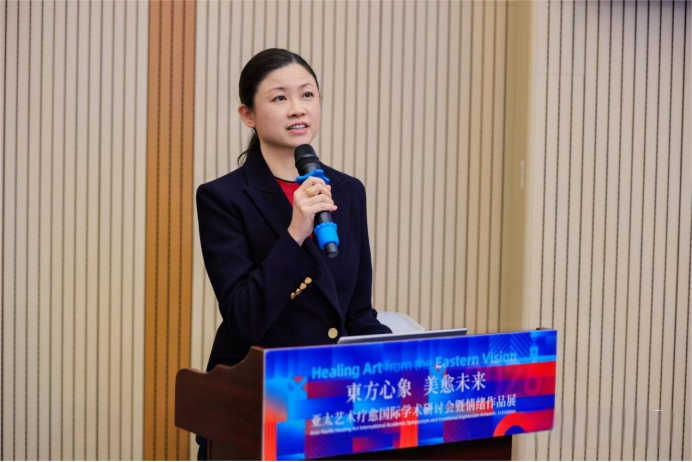
Prof. ZOU Zhirui, Former Director of the Ballet Department at Beijing Dance Academy, discussed the unique role of ballet in building inner order and providing emotional comfort, based on the Eastern practice of ballet therapy.
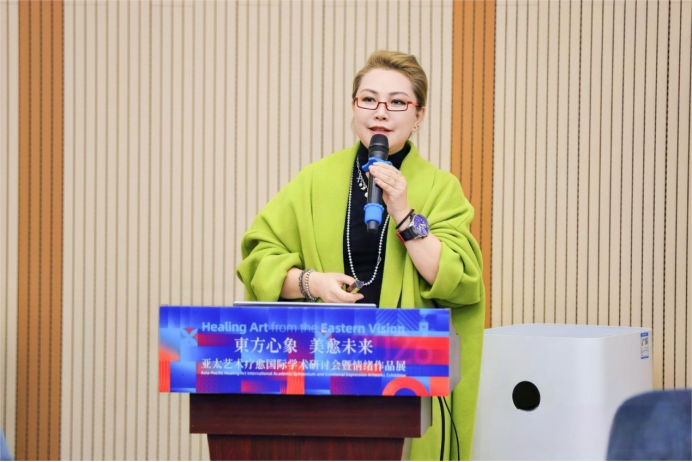
Prof. WANG Kaihong, Dean of the College of Art of Guangdong University of Foreign Studies, proposed a Chinese model of growth-oriented art healing through infiltrative aesthetic education, outlining a development path for art healing with Chinese characteristics.
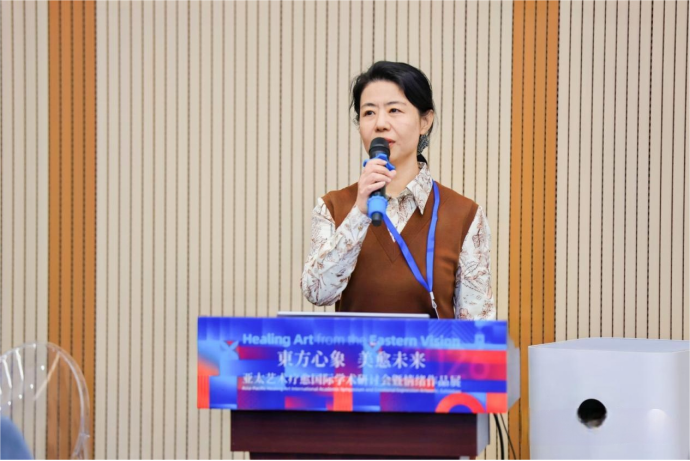
Prof. FENG Ya, Ph.D. Supervisor at the Communication University of China, analyzed the mechanisms of music therapy and called for breaking down barriers between art forms to create synergy in art healing.
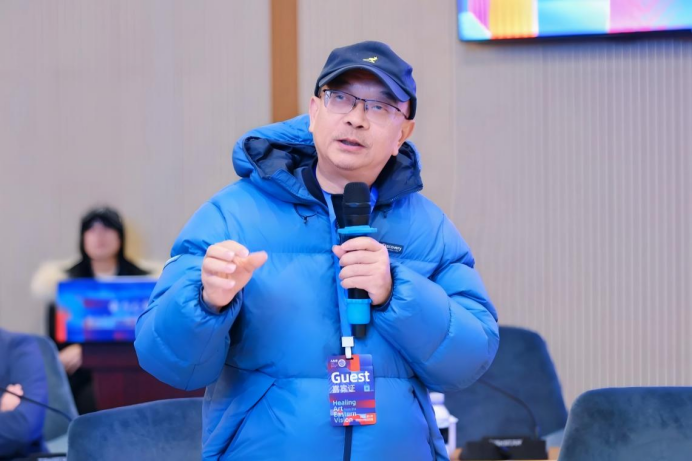
Prof. YU Jiancun, Ph.D. Supervisor at the College of Art Technology & Management, Shanghai Theatre Academy, discussed script therapy practices from a Western perspective.
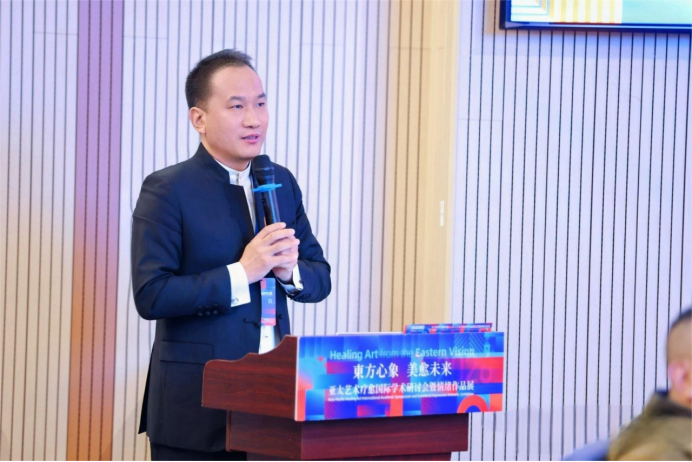
HOU Libin, Secretary-General of the Professional Committee of Traditional Culture and Education of CNSPAC and Vice President and Secretary-General of AAHI, introduced the development plan for the micro-major in art healing, aiming to advance the field from an academic discipline perspective.
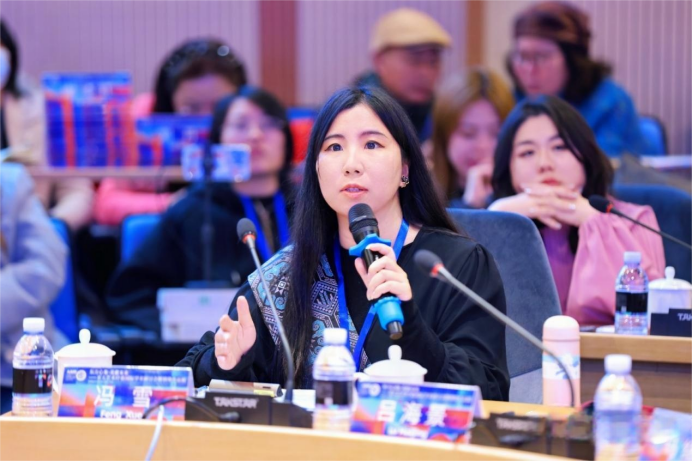
FENG Xue, Associate Professor and Master’s Supervisor at the School of Information and Management, Guangxi Medical University, shared her instructional design and evaluation system for integrating art healing into medical university curricula, drawing on their group intervention practices.
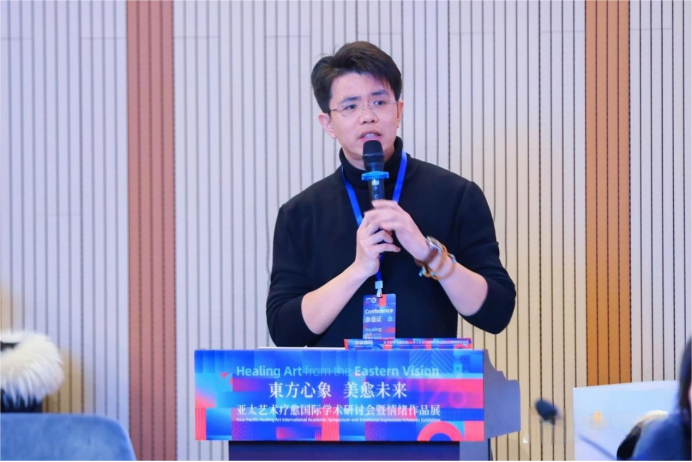
MA Xufeng, Postdoctoral Fellow in Communication Studies at Tsinghua University and Assistant Professor at the College of Art & Media, Tongji University, focused on the development pathways of AI-based mental healing, presenting multiple application scenarios.
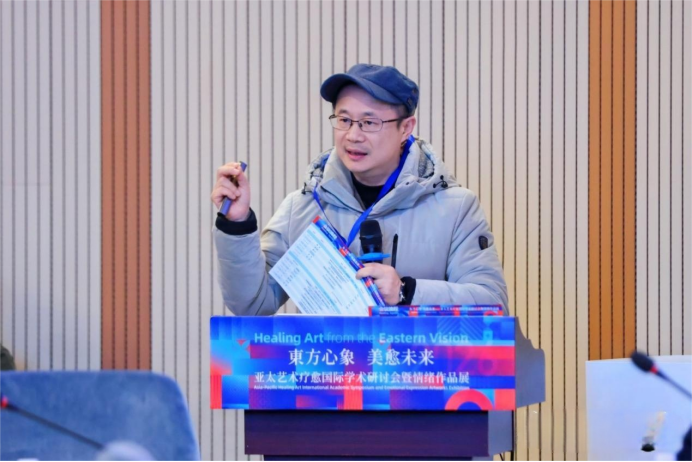
Prof. FANG Hao, PH.D. Supervisor at the School of Art & Design, Wuhan Institute of Technology, showcased cutting-edge explorations in mindfulness art healing integrating virtual reality and brain-computer interface technology.
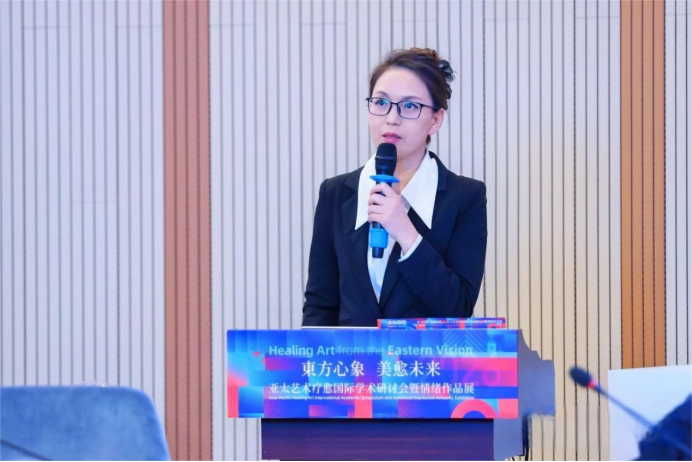
Prof. LYU Haijing from the Art Academy of Northeast Agricultural University, shared practical approaches to indoor healing using natural elements, offering nature-based healing solutions for urban populations.
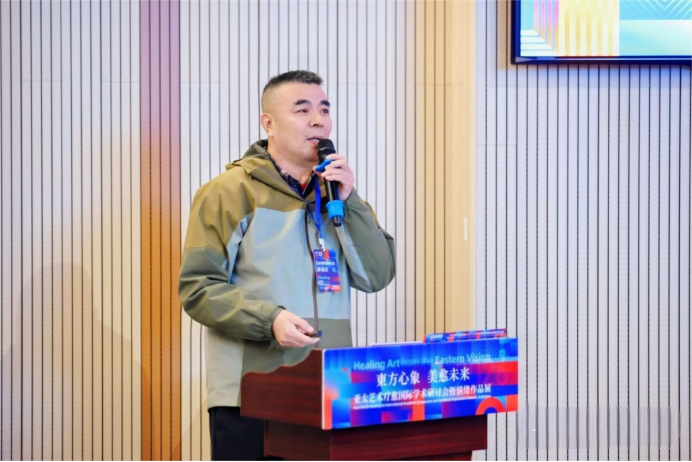
Prof. FANG Xiaokun from the Zhujiang College, South China Agricultural University, focused on calligraphy therapy, demonstrating the contemporary healing power of traditional calligraphy through case studies and practical pathways.
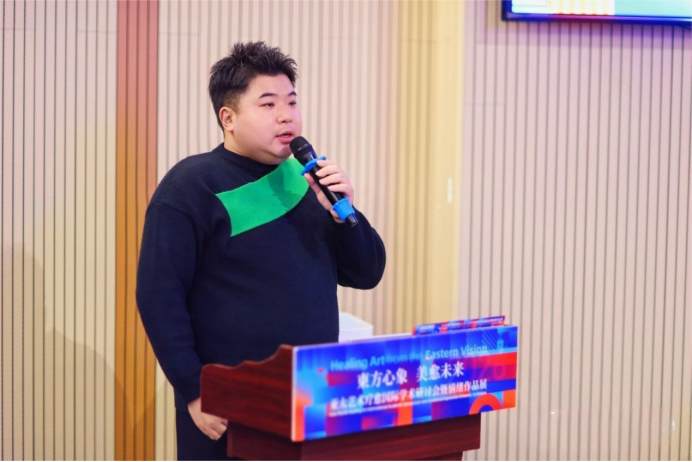
DONG De, Associate Professor and Master’s Supervisor at the College of Music, Hainan Normal University, provided an in-depth analysis of the healing emotional education within dram teaching.
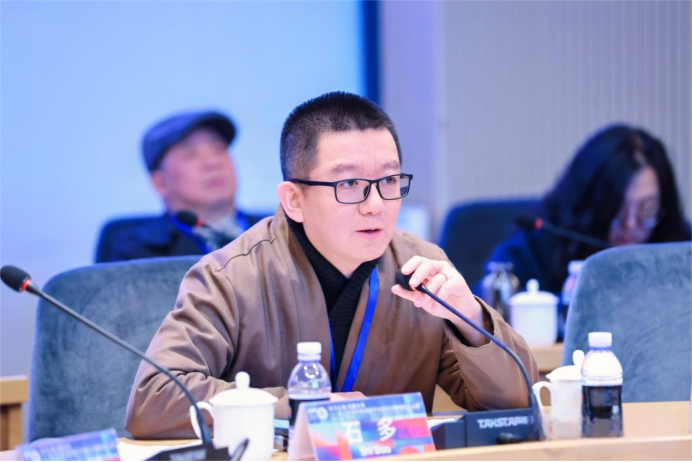
SHI Duo, Executive Director of AAHI, delivered a concluding academic presentation titled “How Art Healing Curation Reshapes Social-Emotional Connections.”
Participating faculty and students actively joined the discussion, sharing their academic insights and research reflections. They explored specific issues in art healing practice and spoke highly of the conference.
The conference was also attended by the following university leaders and professors: LIU Xiaoqin, Director of the Psychological Counseling Center at the University of Health and Rehabilitation Sciences; SHAO Shuangyan, Course Leader in Kinesiology at the University of Health and Rehabilitation Sciences; GANG Yi, Head of the Dance Department and Professor at Lingnan Normal University; YOU Xi, Professor at Shanghai Theatre Academy; SHEN Chunlan, Head of the Public Art Department and Associate Professor at the School of Arts and Innovation Design, Suzhou City University; HOU Yi, Associate Professor at the School of Design and Fine Arts, Qingdao Huanghai University; GUO Xiaoyang, Professor at Suzhou University of Science and Technology; TAO Ning, Professor at the Art Academy of Northeast Agricultural University; WANG Weiliang, Professor at the Art Academy of Northeast Agricultural University; BAO Geriletu, Responsible Professor in the Art Healing Micro Specialty at Hainan University; XU Xiaoyin, Professor at the School of International Communication and Arts, Hainan University; ZHANG Zhe, Associate Professor at the School of International Communication and Arts, Hainan University; LI Zhao, Head of the Art Department, Xi’an Fanyi University; QIAO Qian, Professor at the School of Architecture and Art, North China University of Technology; SUN Xiao’e, Director of the Art Education Research Center, Art College, Qingdao University; LI Bin, Director of the Dance Teaching and Research Office, Art College, Qingdao University; MA Xiaowen, Associate Professor at the College of Art, Qingdao University of Science and Technology; ZHANG Zhaodi, Deputy Director of the Art Healing Center, Hebei Academy of Fine Arts; LI Xiaohu, Head of the Urban Landscape Design Research Center, Qingdao University; ZHUANG Xinyu, Associate Professor at the Art College, Qingdao University; ZANG Xue, Professor and Head of the Art and Technology Department, College of Art, Qingdao University of Science and Technology; as well as ZHANG Weiwei and CHEN Lin from Nanjing Normal University Taizhou College, along with over a hundred other faculty members.
At the conclusion of the conference, Mr. WANG Jiansong, on behalf of the organizing committee, presented performance certificates, exhibition certificates, and appointment letters for expert advisors to the Asian Art Healing Institute, highly commending the academic contributions and artistic practices of the attending experts and scholars.
3
Cross-Disciplinary Integration, Building Consensus on Art Healing Development
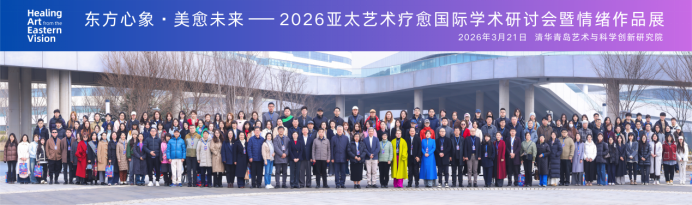
The successful hosting of this Asia-Pacific Healing Art International Academic Symposium and Emotional Expression Artworks Exhibition represents a significant practice of TASA’s long-term focus on future well-being and health innovation, promoting the integration of art and science. TASA has always been committed to exploring the profound value of art in fields such as mental health, social healing, and life care through the integration of arts and science. This event brought together high-quality academic resources from both domestic and international spheres. While injecting cutting-edge concepts and innovative momentum into the local health and wellness sector in Qingdao, it further highlighted the ongoing efforts of TASA in building interdisciplinary platforms and facilitating the transformation of academic achievements. In the future, TASA will continue to deepen its academic foundation in the integration of arts and science. Through more impactful research and practice, it aims to respond to the era’s profound call for physical and mental well-being. TASA also looks forward to the joint attention and participation from all sectors of society, which can work together to promote the broader application of art healing for the benefit of society.